Category Archives: Blog

Plants that Change Our World & Lives

Autumn is the most beautiful season in the Albany Area, especially on ACPHS campus. I am honored to welcome our distinguished alumni, families, friends and guests, and our own students, faculty, and staff. We are all colleagues and learners, willing to spend 1 hour in this lecture hall, maybe even longer…

We are excited to kick off this Lecture Series on Botanical Medicines, which was initiated less than a year ago. It was inspired by our Class of 1969 Medicinal Garden who envisioned this and supported by Alumni and Friends. It was opened last year, October 2nd. Yes, tomorrow is our 1st birthday!

The same group also envisioned beyond the garden — encouraged and supported a series of initiatives on botanical medicines – Working together, we established Medicinal Garden Interest Group (MedGIG) of volunteer students, faculty, staff, and friends; We started new academic program, such as new course, Introduction to Botanical Medicines, contributed by a group of internal and extramural experts; We started Adapt-A-Plant Student Research projects, AND this Lecture Series on Botanical Medicines. This lectureship invites and sponsors prominent speakers to present interesting, inspiring, insightful, and impactful topics, to promote and strengthen both research and education on plant-based products of foods, nutrition, wellness, and therapeutics.

Yesterday, Optimus Robot was released during Tesla’s AI Day. Comparatively,  Botanicals seems like an old topic. But ACPHS is an institution for LIFE! We are not waved by short-term fashions, but holding a global vision with inclusiveness, for longevity and eternity, from the beginning to the end, pediatrics to geriatrics, small molecules to biologics, microbiology to populational sciences, nanoscale to global health…

Plants are LIVES. Botanicals are our main living sources of food, energy, nutrition, and medicines, and inspirations of new molecules and therapies. We have been learning continuously about and from plants. They shape, strengthen, and heal our own bodies, souls and lives.  

Our group has been looking for an inaugural speaker who can bring an inspiring, interesting, insightful, and impactful topic. “You look for someone in the crowd a thousand times, and suddenly, you turn your head, and that person is there where the light is waning”. This is a beautiful Chinese poem about finding the true love. Here, we found Dr Wallace Pickworth, our own ACP graduate, pharmacologist, and leader in the research of nicotine dependence and tobacco abuse, with over decades of research and clinical experiences….

Tobacco surely is an impactful plant that changed the world. I believe you will also find Dr Pickworth’s insights are interesting and inspiring. Without further ado, let’s welcome Dr Wallance B. Pickworth!

(Opening remarks at Inaugural ACPHS Lecture on Botanical Medicines, October 1, 2022)
ACPHS Botanical Garden Challenges: 1881-1969-2021

Botanicals have been the main sources of medicines throughout the human history, until the recent century. Although pharmaceuticals are dominated by synthetical chemicals and biologicals now, we still should eat more vegetables and fruits, right? While botanical medicines become hidden treasures, I believe plants still will provide more balanced nutrition, healing, and wellness products, that are sustainable, economic, environmental, and beneficial. Actually, US FDA has been trying to approve more botanical products, but has been limited by bottlenecks of sciences, technology, strategies, and clinical supports.

I want to add my thanks to our Alumni and ACPHS Class of 1969, who made new Medicinal Garden a reality on our campus, and reminded us that Albany College of Pharmacy was the hub of leaders, experts and students of pharmacognosy and botanical medicines not that long ago. Thank President Dewey and the college leadership for working with contractors and architects to make our first Campus Master Plan a reality. And to finish the project on time! It had been a dream for many of us! Thank you, faculty, students, and community are embracing this initiative immediately, just within couple of months, even during the pandemic. But the pandemic reminded us that how much we are longing for wonderful outdoor spaces and in-person interactions under the Sun! All of this happened at the right time, right place, with right people.

This Medicinal Garden is an exciting challenge and opportunity for us at such a time, inspiring us to be a leader again. Do we dare to be different, to be unique, and to be #1 in something but not everything? — So that ACPHS students can be valuable and competitive, Beyond Practice Ready as the next generation of leaders to improve the health of our society. I believe Botanical Medicine is such an area of Renaissance, for new development, new curriculum, new research, new practices based on new sciences, with new opportunities for community service, outreach, and collaboration. We can carry our heritage and shine as a College of Pharmacy and Health Science for another 140 years!

Faculty and students are embracing this Botanical Garden challenge for the long run. Thank you all once again! (Oct 2, 2021 at Ribbon Cutting for ACPHS Class of 1969 Botanical Garden)

USA Coronavirus Timeline:

Resources:

https://www.nytimes.com/2020/01/21/health/cdc-coronavirus.html.

https://www.nytimes.com/2020/1/30/health/coronavirus-world-health-organization.html

https://www.cdc.gov/media/releases/2020/p0206-coronavirus-diagnostic-test-kits.html

https://www.fda.gov/emergency-preparedness-and-response/mcm-legal-regulatory-and-policy-framework/emergency-use-authorization

https://www.cdc.gov/media/releases/2020/t0212-cdc-telebriefing-transcript.html

https://www.thelancet.com/journals/lancet/article/PIIS0140-6736(20)30418-9/fulltext

Starting AAPS-PDPD Education Forum for Pharmaceutical Scientists

The Pharmaceutical Discovery & Preclinical Development Community (PDPD) of American Association of Pharmaceutical Scientists (AAPS) is organizing a new Education Forum for Pharmaceutical Scientists, especially faculty and Educators.

[Background]

About 38% of AAPS members are from academia (15% faculty, 5% postdoc, 18% students), but faculty activates and involvement seems to be decreasing. AAPS should still be the home of pharmaceutical sciences faculty, although less and less faculty attended the AAPS Annual meeting for various reasons.

Gap between Faculty Teaching and Research

Faculty of Pharmaceutical Sciences need a forum and gathering venues. There has been a gap between Scientific organizations such as AAPS (mostly industrial scientists now) and Educational organizations like AACP and others. To help both AAPS and Pharmaceutical Sciences faculty, we can have a team to improve the Annual Meeting contents with more exciting research from academia, and to promote more collaborations among university-industry-government.

Need for Better Pharmaceutical Sciences Education

A fundamental mission of AAPS is education. AAPS has tried to invest and reach out to more campuses, even beyond pharmacy schools. But the education programs of Pharmaceutical Sciences has had little change for decades, when PharmD and other education programs expanded dramatically with many innovation curricula and pedagogies. We need a body of educators to bring new models and approaches of Pharmaceutical Sciences Educations, as well as trainings for established professionals and executives, as well as the public.

Value for AAPS members – Academic Career Development

I got to know many good mentors and friends from AAPS through my earlier career. But we met less and less in AAPS, without a common topic, forum or venue. We need a team to submit more good programs that interests faculty as well as others. We can help scientists who like to join or being adjunct faculty in universities to advance their career goals. We need to encourage more young colleagues-in-training to join our academic pipeline.

Value for AAPS-PDPD – membership Engagement

PDPD have many of faculty members, maybe the majority of faculty in AAPS. Therefore, we start here. Thank you for joining us, either you work in a college or you are Pharmaceutical Scientist interested about education or training, wherever you are.

Therefore, I draft the following proposal to organize a AAPS-PDPD-Education Forum (tentative name) for more discussions:

********************************************

AAPS-PDPD-Education-Forum Proposal Draft for Further discussion:

Vision: Home of Educators to Revive Pharmaceutical Sciences

Mission:

  • Be a home forum for Pharmaceutical Scientist-educators to advance education and research
  • Enhance the network of faculty and young colleagues-in-training for career development
  • Advocate and strategize for intra and extramural support to advance pharmaceutical sciences on campus
  • Revive Pharmaceutical Sciences by creative academic research and innovation,
  • Foster collaborations between academia, industrial and government by innovative mechanisms

Near-term tasks:

  1. teamwork to bring more and better programing that interest all
  1. Annual Meeting 6thtrack: Discovery and Basic Research
  2. Annual Meeting Events: Community Social and Special sessions during weekend
  3. Year around programs of webinar
  1. Explore new approaches and models of Pharmaceutical Science Education,
  1. g. how to use AAPS great contents for education and trainings, and eLearning’s,
  1. Form a network of active Pharmaceutical Sciences Educators for mutual support and career development
  1. g. mentor/help colleagues who are interested in academic career (industrial scientists, postdocs, students…)
  2. g. how to collaborate among Academy, industry and the FDA

HaiAn Zheng

(1/31/2020)

Design the best PhD Qualifying Exams

PhDs may still remember the tough days during their general exams, also called qualifying exams, preliminary exams, or comprehensive exams. The Qualifying Exam is an excellent name to start this discussion, which is clear about the goal of these exams – to qualify students’ competency in the PhD program. We can find some Core Competency in both “foundational knowledge” and “Soft-skills”.

Our graduate programs are Pharmacy and Healthcare related, such as Pharmaceutical Sciences, Outcome Research & Populational Science, Biomedical Sciences, Translational and Clinical Sciences… These are very interdisciplinary and not easy to make a cookie cutter for all Pharmacy Graduate Programs. But the “soft -skill” part is easier to work out and timely needed. It is often yet tested in traditional qualifying exams, so we can share some wisdom, and teamwork for innovative practices of Qualifying Exams among schools and programs.

During AAPS AM 2017,  GradEd-SIG hosted a forum on Pharmacy Graduate Educations, and the AAPS Graduate Education and Research Committee shared their committee report as below, which is a good starting point — Core Competency, Programming, and Emerging Innovation in Graduate Education within Schools of Pharmacy.

We can keep moving on… In general, I think project-based and oral assessments have been successful traditions we should keep for Pharmacy Graduate Education… Thank you for sharing!

HaiAn Zheng responded on a AACP discussion (1/29/2020)

Am J Pharm Educ. 2017 Oct; 81(8): S11.

https://www.ncbi.nlm.nih.gov/pubmed/29200459

Click to access AACP%20Report%20of%20the%202016-2017%20Research%20and%20Graduate%20Affairs%20Committee%2020170414.pdf


How we prepare for an industrial career?

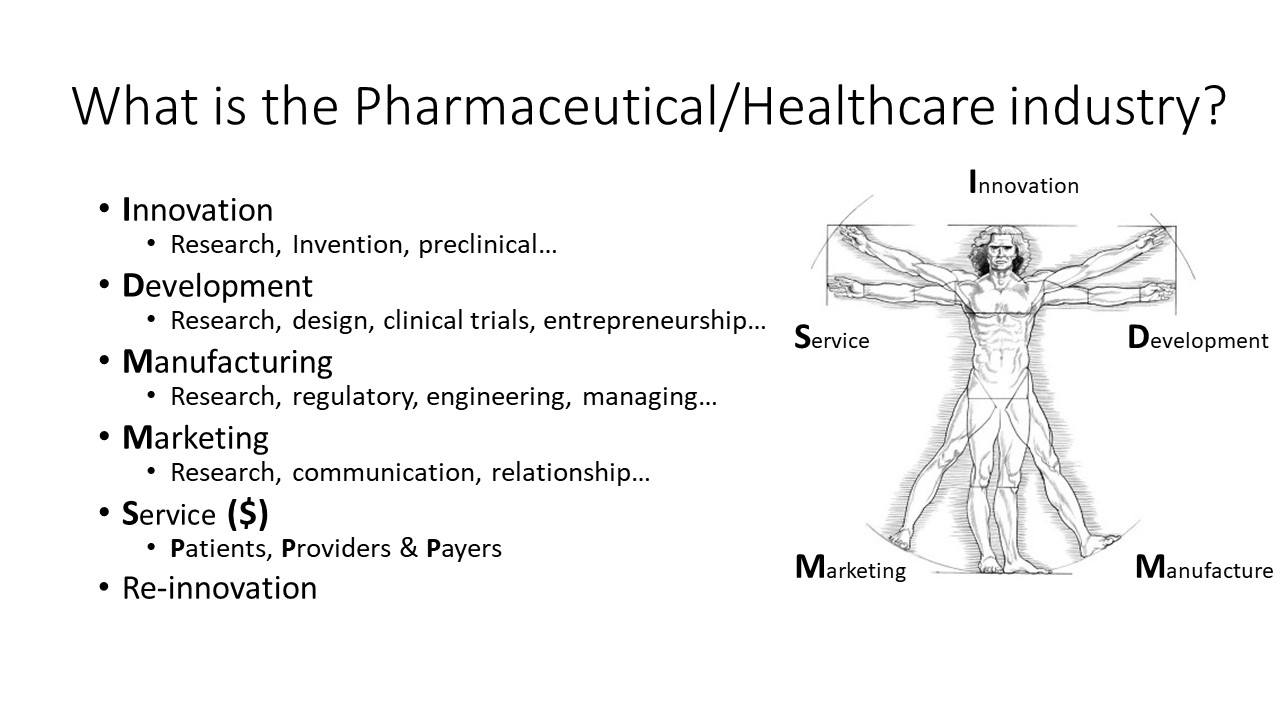
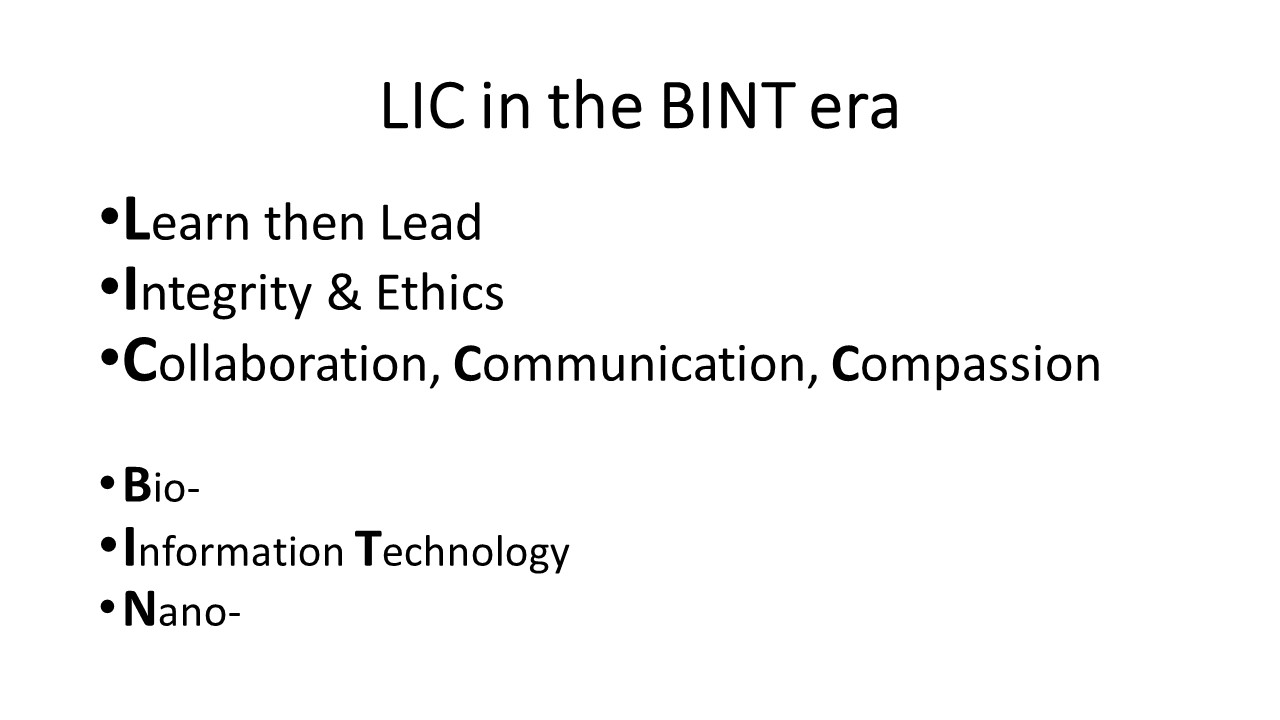
Today’s Health Industry has been integrated among Pharmaceutical, Biotechnology, informatics companies, and Pharmacies, hospitals, insurance group payers…. So almost every student at ACPHS are preparing for an industrial career. Here are 2 slides I presented today to students when I gave a talk, about how to get prepared for an industrial career.

Slide6.JPGSlide2.JPG